For decades, we’ve been told that recycling is the answer to our plastic problem. But while recycling rates have stayed at 5%, plastic production has exploded.
Each year, the world produces more plastic than ever before — and most of it is designed for single use. From food packaging to online orders, we keep adding more plastic to the system than it can possibly handle.
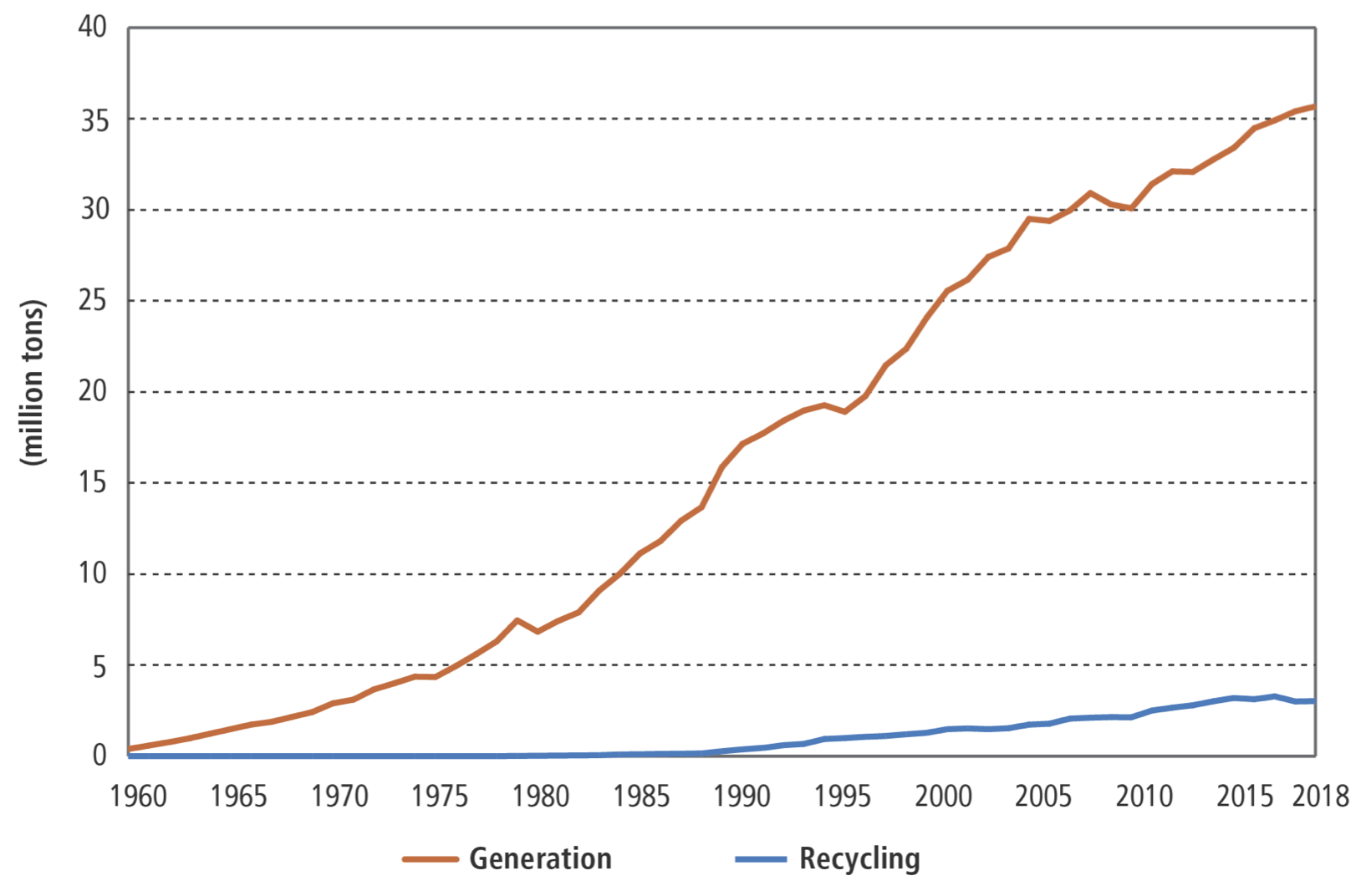
Even if recycling worked perfectly, it couldn’t keep up with how fast we’re making new plastic.
This growth is driven by convenience and consumption — products made to be quick, disposable, and cheap.
That’s why the recycling system keeps breaking:
it was never built for an infinite stream of new plastic.
It’s a linear model in a world that needs circular solutions.
♻️ What Recycling Actually Means
Recycling works best for materials that can be melted down and reformed over and over again — things like aluminum, glass, and some metals. These materials can be recycled almost infinitely without losing quality.
But for plastics, it’s a different story.
Even though many plastic containers carry a recycling symbol, the reality is that recycling plastic is rarely profitable.
Recycled plastic must be collected, sorted, cleaned, and shredded before it can be reused — a process that costs more than producing new (“virgin”) plastic from fossil fuels. Because it’s cheaper to make new plastic, the industry has little incentive to use recycled material.
The result: far more new plastic is produced each year than recycled plastic.